
How Hidden Infrastructure Protects Your Property During Heavy Rains
When it comes to architecture, most people often refer to what they can see, like materials, facade shapes, and interiors. Hidden infrastructure is beneath this visual layer, and there exists a silent network that enables buildings to function. From HVAC systems to structural reinforcements, these invisible systems form the spine of any functional space.
For the apartment developers, it is easy to focus on design, location, and amenities, but utility readiness is just as critical. But delays in infrastructure can lower effectiveness. Here is how it protects your property, especially during heavy rains.
Why Hidden Infrastructure Matters More Than Ever
Here you go!
- Energy Efficiency: Hidden infrastructure, such as sealed ductwork, insulation, and efficient wiring, plays a major role in reducing energy consumption. These systems prevent heat loss in winter and keep interiors cool in summer and warm in cooler months. When designed properly, hidden energy systems lower your utility bills, reduce environmental impact, and enhance overall property sustainability.
- Health and Air Quality: Air filters, moisture barriers, and ventilation systems behind your walls and ceilings quietly protect indoor health. Proper and healthy airflow reduces humidity, prevents mould and mildew growth, and filters out dust and allergies. Investing in well-maintained systems ensures better health, improved comfort, and a cleaner living space for occupants.
- Security and Surveillance: In high-security or corporate spaces, data security and surveillance are top priorities. Modern properties also rely on embedded sensors, hidden wiring, and discreet surveillance systems to ensure safety. Here, motion detectors, integrated alarms, and smart monitoring systems work silently in the background. This invisible layer of protection strengthens property security and offers peace of mind without compromising privacy or design.
- Flexibility and Maintenance: Future-ready design demands that hidden infrastructure be accessible for repairs and upgrades. Removable ceiling tiles, raised flooring, and modular wall panels have become standard in many commercial buildings.
Invisible Systems That Safeguard Your Property
Let’s find it!
Integrated Stormwater Planning
Professional stormwater management services design customized systems that consider soil type, slope, and rainfall intensity. Experts integrate retention systems, underground pipes, and drainage pathways to handle heavy rainfall. Strategic planning ensures water flows safely away from structures, prevents flooding and erosion, while protecting your driveways, landscaping, and building foundations from costly damage.
Underground Drainage Systems
Underground drainage pipes are designed to redirect rainwater away from your foundation. These systems prevent water from pooling around walls and reduce the risks of leaks, cracks, and structural damage. Properly designed drainage ensures your property remains dry, stable, and protected even during heavy rainfall.
Foundation Waterproofing Layers
Waterproof sealants and membranes applied around your foundation typically act as a protective barrier against moisture intrusion. These layers stop groundwater from seeping into crawl spaces and basements. This invisible shield becomes crucial in preventing wall dampness, mould growth, and structural weakening. It preserves both the integrity and value of your property.
French Drains and Subsurface Solutions
French drains, along with subsurface drainage solutions, are designed to redirect excess rainwater away from your foundation before it causes any potential structural damage. These are installed beneath the ground and use perforated pipes surrounded by gravel to collect and channel water safely. This innovative solution reduces soil saturation, prevents water pooling, and relieves hydrostatic pressure against basement walls. It helps to maintain structural stability and protects your property from long-term moisture issues.
Culverts Beneath Driveways
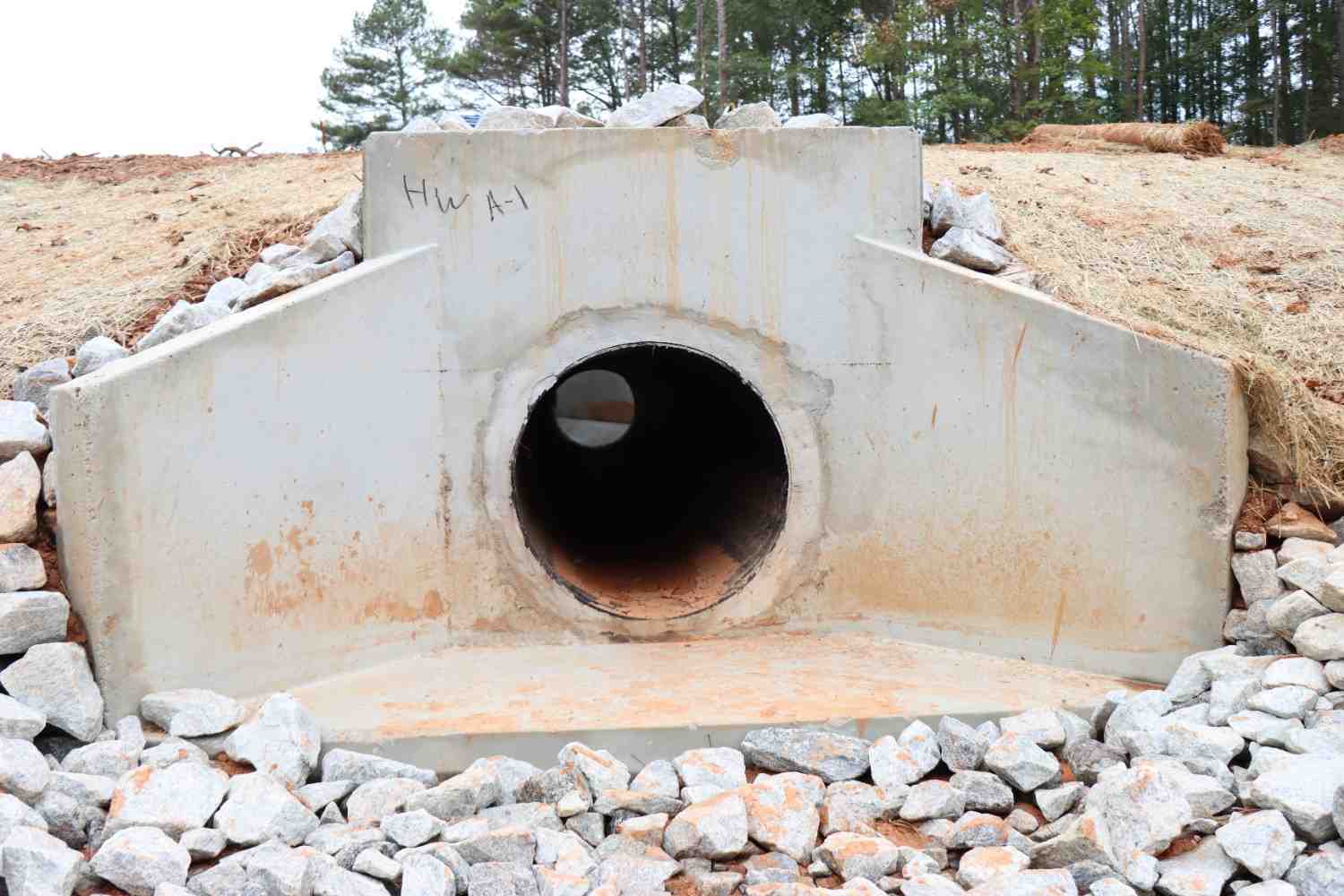
Curverts are hidden passageways that allow water to flow under pathways, driveways, or roads without causing surface flooding. Proper culvert repair and installation ensure uninterrupted water movement during heavy storms. During intense rainfall, properly-sized and maintained culverts ensure uninterrupted drainage. It protects driveways, landscaping, and nearby structures from cracking, flooding, or costly structural damage caused by uncontrolled water flow.
Retention and Detention Systems
Retention and detention systems temporarily store large volumes of rainwater during heavy storms. It releases water gradually once conditions stabilize. It controls the rate of discharge and reduces the risk of flash flooding. This unique system can also prevent municipal drains from becoming overwhelmed. By managing peak flow rates, they reduce the burden on public drainage networks and prevent localized flooding. It helps to maintain a balanced and controlled water discharge.
Backflow Prevention Valves
Another way is to incorporate backflow prevention valves. These are installed within sewer lines to stop wastewater from reversing direction during heavy rainfall. When the public drainage systems become overloaded, these valves automatically close. It blocks contaminated water from entering your basement. This concealed safeguard protects your foundation from sewage backups, foul odours, and health hazards. Proper installation with routine inspection ensures reliable performance and offers critical protection during extreme weather events.
Hidden infrastructure may be invisible to the naked eye, but it is foundational to every aspect of architecture. It typically governs how buildings perform, how long they endure, and how people feel within them. By setting up environments that are smarter, healthier, and more adaptable, the mastery of the unseen will define the success of the visible.