
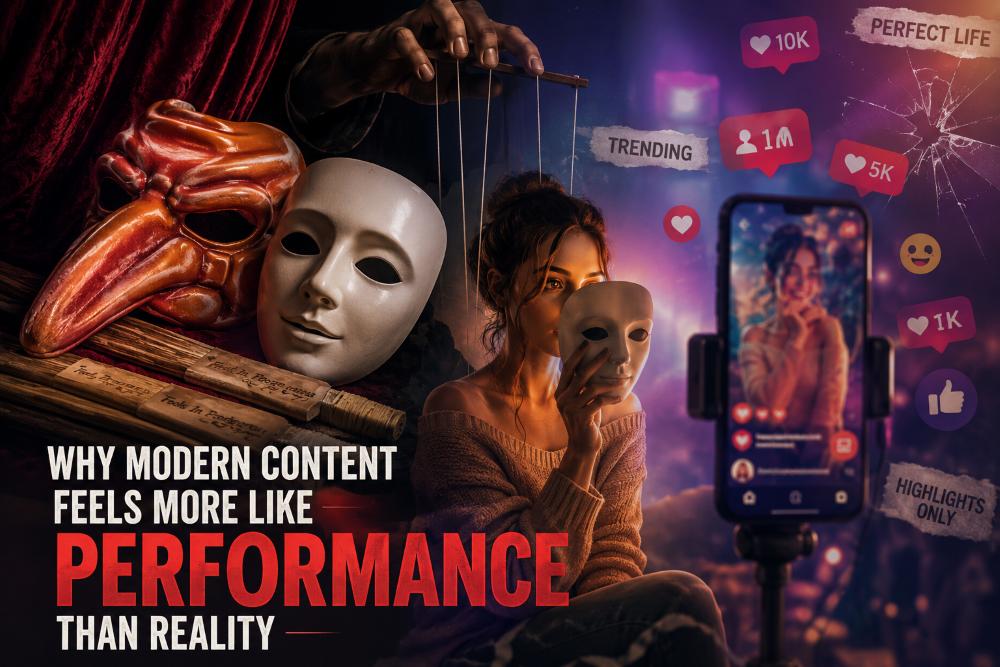
Why Modern Content Feels More Like Performance Than Reality
In today’s age of digitization, connection no longer feels like a reflection of real life. But a carefully staged performance is typically designed to capture attention. Social media rewards emotional drama, perfection, and viral trends. All of these encourage people to act for audiences rather than express genuine experiences.
There is no doubt that modern creators chase visibility and validation, but the authenticity slowly fades over time. It leaves behind curated identities that entertain viewers but rarely reveal the truth of daily human life. Here are the key reasons online content no longer feels realistic.
The Reasons behind Online Content No Longer Feels Real
Let’s read it!
Algorithms Reward Attention, Not Authenticity
Modern platforms, especially social media platforms, reward content that keeps users engaged, but not that content that feels honest or meaningful. Creators generally exaggerate emotions, opinions, or trends just to remain visible. Traditional performers hide behind theatre masks, and like them, many online personalities become carefully designed characters. They are shaped by algorithms that prioritize reactions, clicks, and constant attention over genuine human connection and individuality.
Validation Has Become Public
In this modern era, social media has transformed personal validation into a public performance measured through likes, comments and followers. People seek approval from strangers increasingly instead of building self-worth privately. The pressure to appear successful, attractive, and happy online. It often creates anxiety because personal value becomes dependent on visible public reactions rather than inner confidence.
Lack of Personal Identity
Online culture encourages influencers to follow trends instead of building their own voice. Many users imitate aesthetics, influencers, or viral opinions to fit in socially. It significantly weakens originality and creates confusion about true identity. It is completely different from commedia dell’arte. You might wonder: What is commedia dell’arte? It is an Italian theatrical style using improvisation, masked characters, comedy, and exaggerated performances to entertain audiences publicly. Now, people begin performing fixed roles online instead of expressing authentic personalities shaped by real experiences and beliefs.
Monetised Vulnerability
Many creators are now involving relationships, struggles and personal trauma into their profitable content. Vulnerability becomes a business strategy as the emotional stories attract audience loyalty and strong engagement. Platforms often reward dramatic exposure instead of healthy boundaries. This can blur the line between real performance and authentic expression.
People are consuming only highlights
Major online content represents carefully selected highlights rather than the ordinary reality. Users mainly share their achievements, beauty, travel, or success while hiding loneliness, failure and struggles. Constant exposure to idealized moments creates distorted expectations and unrealistic comparisons about life.
Encourage Copy-Paste Personalities
Trends are spreading rapidly online, which encourages users to repeat the same opinions, jokes, fashion and behaviour. Individual creativity is overshadowed as familiar content gains faster engagement. There is a fear of being ignored for appearing different. Similar to using slapstick props, online personalities often feel repetitive, artificial, and designed mainly to entertain rather than reflect genuine thought and uniqueness.
Online content often feels less real as popularity is rewarded more than authenticity. As modern audiences constantly consume emotional performances and curated highlights, social media platforms and other digital spaces become less human.