
The Greenest Car Decision You Can Make Might Be Not Owning One at All
Electric vehicles carry one of the strongest environmental promises in the modern transportation world. Zero tailpipe emissions. Dramatically lower carbon output over their lifetime compared to gasoline-powered cars. A step toward cleaner air in cities where traffic pollution has been a serious health concern for decades. Most people who care about the environment are genuinely excited about what electric vehicles represent. The problem is that the most environmentally meaningful version of this transition is not just about what kind of car people drive. It is about how many cars are actually in circulation, and right now that number keeps climbing.
Manufacturing a Car Has a Real Environmental Cost
Building any car, electric or otherwise, requires enormous amounts of raw material extraction, energy, and industrial processing. The lithium for the battery. The steel for the frame. The rare earth materials that go into the motors and electronics. Producing a new vehicle generates a significant environmental footprint before it ever turns a wheel. The most effective way to reduce that impact per person is not to make every vehicle electric. It is to make sure that every vehicle already in production gets used as much as possible by as many people as efficiently as possible. That is not an argument against electric vehicles. It is an argument for sharing them.
What Shared Access to Modern Electric Vehicles Looks Like
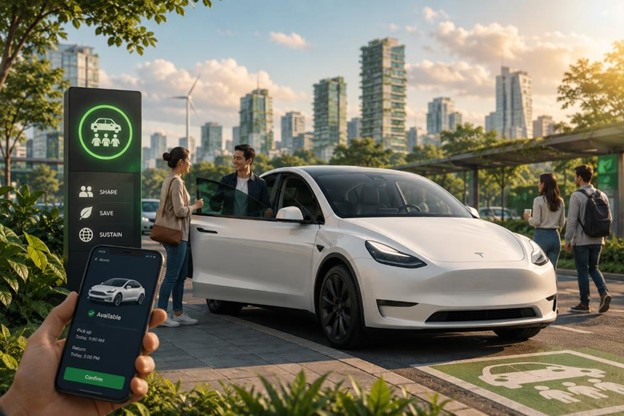
The Tesla Model Y represents one of the most capable and efficient electric vehicles currently available for everyday transportation. Impressive real-world range. Reliable performance. A technology ecosystem that keeps improving over time. Most people who would love to drive one regularly simply cannot justify buying one outright. A shared Tesla Model Y service makes that vehicle available to a community of users, maximizing how often it is actually on the road doing useful work instead of sitting idle in one person’s garage for most of the day. That is a smarter use of a well-made machine by almost any measure you want to apply.
The Environmental Math Gets Better With Every Member
Every additional person who gains transportation access through shared electric vehicles rather than purchasing their own is one fewer new car being manufactured. One fewer vehicle being insured, maintained, and eventually retired. One fewer parking space needed in an already crowded city. A shared electric vehicle membership compounds these benefits across an entire community. What looks like a personal financial decision at the individual level turns into something with real environmental significance when you multiply it across hundreds of households making the same choice in the same city. Scale matters enormously in environmental decisions, and this one scales well.
Living Lighter Without Giving Anything Up
One of the things people who make this transition consistently report is that they did not actually miss what they gave up. They expected to feel the absence of ownership more than they did. What they found instead was that reliable access to a quality vehicle covered everything they actually needed, and the financial and environmental overhead they shed was something they never wanted in the first place. Living with a smaller footprint does not have to mean living with less. In this case, it tends to mean the opposite. More flexibility. Less stress. And the quiet satisfaction of knowing your transportation choices are not working against the world you want to live in.