
Why Anti-Fatigue Mats Are Becoming Essential for Modern Warehouses and Factories
Walk into any busy warehouse or factory and you will notice people constantly on the move or standing in one place for hours. That kind of work takes a real toll on the body, even when workers hardly think about it during the day. This is one reason anti-fatigue mats have become a talking point in many workplaces across South Africa. They are a simple addition, but they can help create a more comfortable environment where people feel supported while getting through long shifts.
Standing all day is harder than it looks
Many warehouse and factory jobs involve repeated movement, lifting, packing, sorting, or operating machinery. Even when the work itself is not physically demanding, standing on a hard concrete floor for several hours can leave workers feeling tired before the day is done.
That tired feeling does not always disappear after a short break either. It often builds up over time, making each shift feel a little more demanding than the last. Finding practical ways to reduce that daily strain is becoming more important for businesses that care about both productivity and workplace wellbeing.
Comfort can improve the working day
People naturally work better when they feel comfortable. It sounds simple, but small changes often make a noticeable difference.
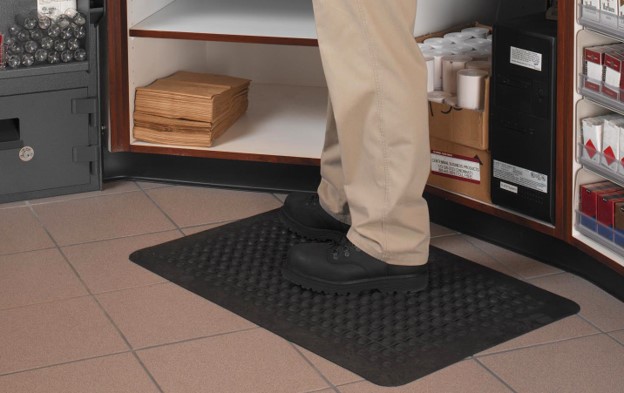
A surface that provides a little cushioning underfoot can help reduce the pressure that travels through the feet, legs, and lower back. Workers may still finish a busy shift feeling tired, but the physical strain often feels more manageable compared with standing directly on hard flooring all day.
Creating a more comfortable workplace is not about making jobs easier. It is about giving people the right environment to perform their tasks safely and consistently.
Safety and comfort often go together
Factories and warehouses are busy places where people, equipment, and materials are constantly moving. That makes safety a priority every single day.
Floors that become wet, dusty, or slippery can increase the chance of accidents. Choosing high-quality matting solutions for suitable work areas can help improve grip while creating a more stable surface for employees who remain at fixed workstations for extended periods.
When workers feel secure in their surroundings, they can focus more on the task in front of them instead of worrying about every step they take.
Small workplace improvements can have lasting value
Many businesses look for major upgrades when trying to improve operations, but smaller improvements are often just as worthwhile.
Better lighting, organised storage, clean walkways, and supportive flooring all contribute to a workplace that feels well maintained. These practical changes may seem minor on their own, yet together they create an environment where people can work with greater confidence and fewer everyday frustrations.
Investing attention in these details also sends a positive message that employee wellbeing matters.
Suitable for different work areas
Not every section of a warehouse or factory has the same demands. Some employees spend most of their day walking between workstations, while others remain in one position operating machinery, assembling products, or checking quality.
Supportive flooring is especially valuable in areas where workers stay on their feet for long periods without much opportunity to move around. By matching workplace solutions to the tasks being performed, businesses can create more practical and comfortable workspaces without making unnecessary changes throughout the entire facility.
Looking after people supports better performance
Modern businesses understand that equipment alone does not drive success. The people using that equipment play an equally important role.
When employees feel physically supported throughout the working day, they are often better able to stay focused and maintain consistent performance. While no single change solves every workplace challenge, paying attention to employee comfort can contribute to a more positive working environment over time.
Final thoughts
Warehouses and factories continue to evolve as businesses look for smarter ways to improve efficiency, safety, and employee wellbeing. Sometimes the most effective improvements are also the simplest ones. Creating a workplace that feels safer and more comfortable helps people perform their best while making everyday tasks a little less demanding. As more businesses recognise the value of thoughtful workplace design, practical solutions that support both people and productivity are becoming an essential part of the modern industrial environment.